
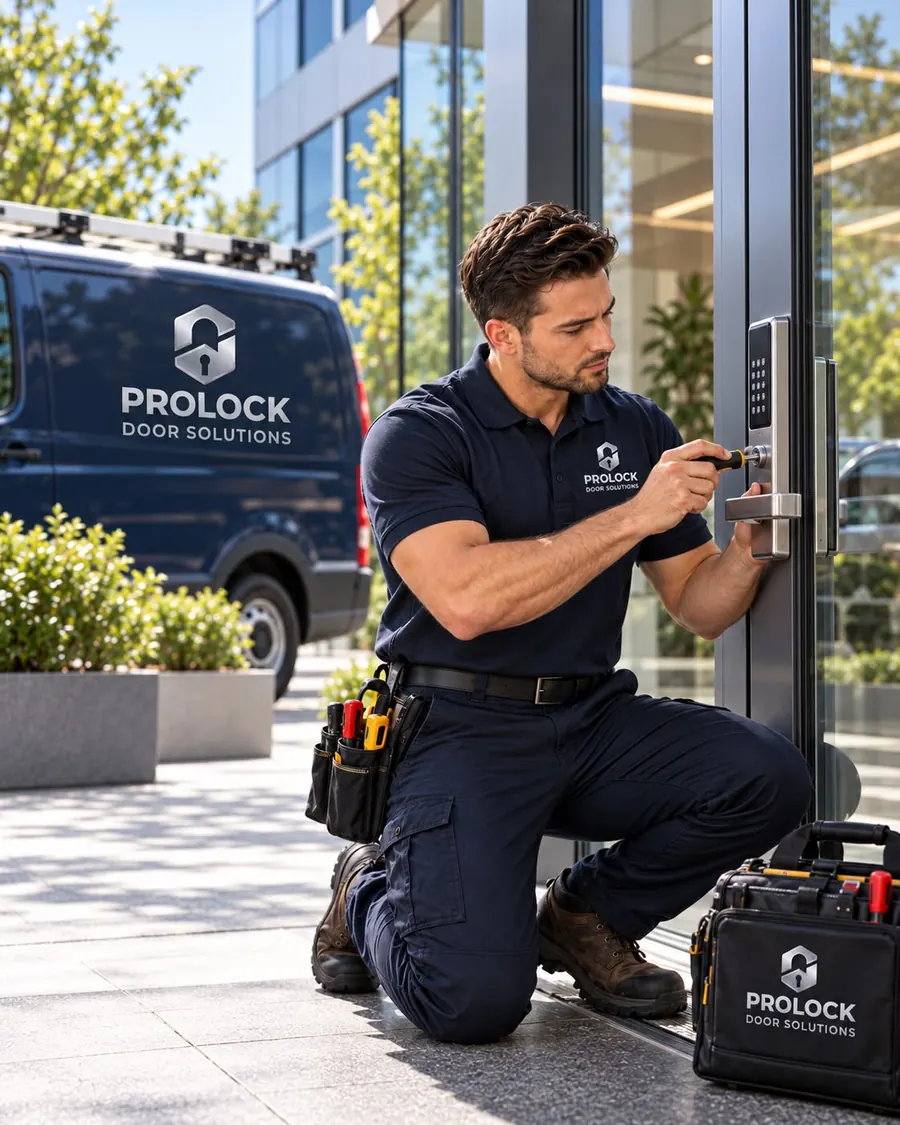
A different kind of lockout
When you're locked out of your home, the problem is you. When you're locked out of your business, it's everyone: staff waiting in the parking lot, deliveries arriving, customers at the door. And the opposite problem is just as urgent. A storefront that won't lock at the end of the night means someone has to stay with it.
What we handle
- Office suites, storefronts, warehouses and back doors
- Narrow-stile aluminum and glass doors
- Hollow metal doors with mortise or cylindrical locks
- Keys lost, stolen, or not returned by an employee
- Cylinders that won't turn, and keys that break off inside
- Doors that won't latch because the frame or hardware has shifted
- Interior offices, file rooms and cabinets
Opening the door, then fixing the cause
We open commercial doors using non-destructive methods whenever possible. Once the door is open, we look at why it happened. Common culprits:
| What you notice | Usual cause |
|---|---|
| Key turns but the door stays locked | Broken cam or tailpiece behind the cylinder |
| Key is hard to turn, then stops | Worn pins or a dirty, dry cylinder |
| Door has to be pushed before it latches | Frame shift, worn strike or a weak closer |
| Paddle or push bar doesn't fully release | Worn linkage in the handle or exit device |
Most of these are repaired on the same visit. If a part has to be ordered, we leave the door secure in the meantime.
When keys walk away
If the lockout happened because a key was lost or an employee left without returning one, we can rekey the lock right away. If it keeps happening, it may be time for a master key system with restricted keys, or access control so you can turn off access instead of changing locks.
Authorization
Before opening a business, we confirm that you're authorized to be there, usually with an ID and something showing your connection to the business, like a business card, a lease, or a manager who can confirm by phone.
Hours
Commercial lockout calls are taken 24 hours a day, 7 days a week.
Preventing the next commercial lockout
Most commercial lockouts trace back to the same few causes, and each one has a simple fix:
| Cause | Prevention |
|---|---|
| Only one person has the key | Give a second manager a key, or add a keypad to one entrance |
| Worn cylinder that sticks | Service or replace it before it fails completely |
| Door has to be pushed to latch | Adjust the closer and strike so it latches on its own |
| Keys copied and lost track of | Rekey to a restricted keyway so copies need authorization |
| Staff forget to undog the exit bar at night | Add cylinder dogging so only key holders can change it |
If your business has had more than one lockout in a year, it's worth a short walk-through. We'll look at the doors your staff use most and suggest the changes that make the biggest difference.
Warehouses and industrial doors
Warehouses and light industrial buildings often have steel doors with mortise locks, rim exit devices and padlocked overhead doors. When a key is lost or a lock fails, we open the door, repair or replace the cylinder, and can bring the building's doors onto one key system for easier control.
Common questions
Can you open a glass storefront door without breaking anything?
In most cases, yes. Narrow-stile doors use specific cylinders and deadlocks that we work with every week.
Our lock won't lock at night. Can it wait until morning?
If the door can't be secured, it usually shouldn't wait. Call us and we'll talk through options, including a temporary fix to secure it overnight.
Do you work on interior office locks and file cabinets?
Yes. See our file cabinet and safe service.