
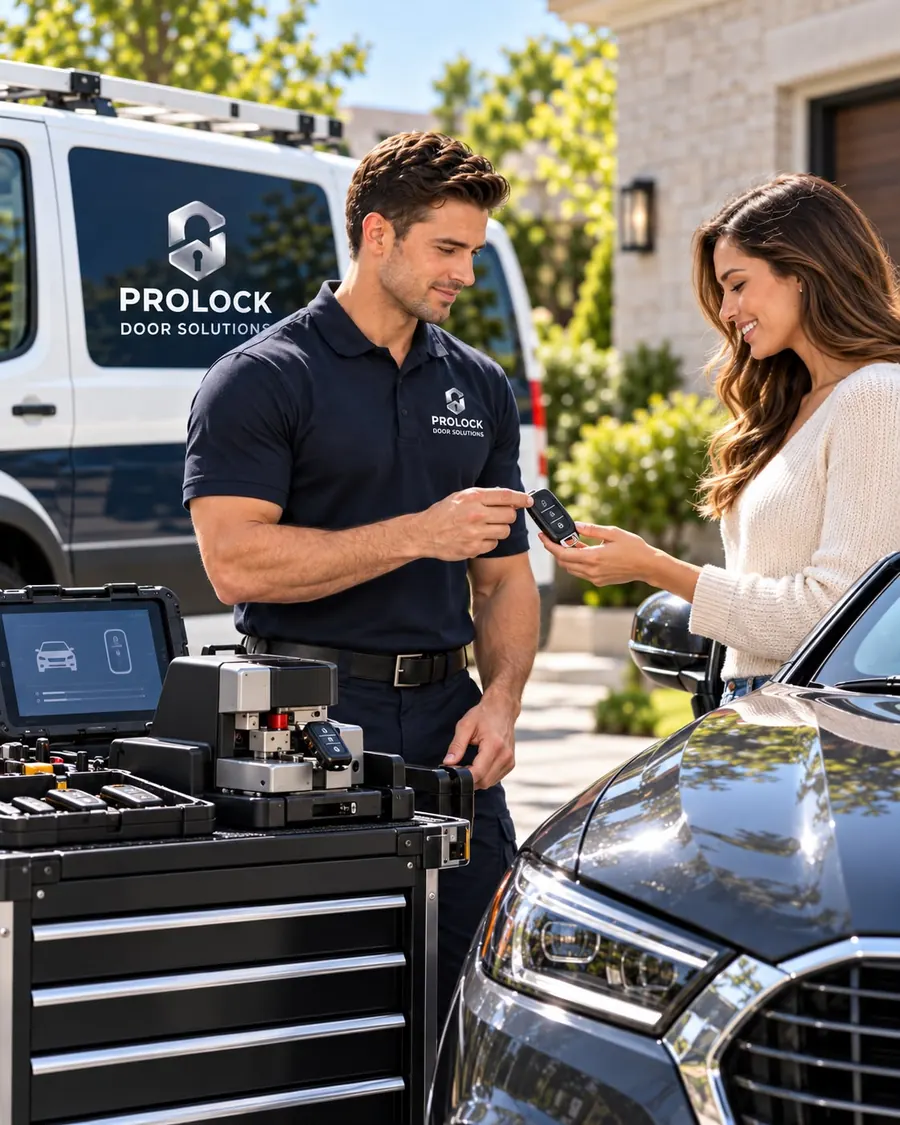
What a transponder key is
A transponder key looks like an ordinary car key with a thick plastic head, but inside that head is a small chip. When you turn the key in the ignition, an antenna around the ignition sends out a signal, the chip answers with a code, and the car's immobilizer checks it. If the code matches, the engine runs. If it doesn't, the engine may crank but won't stay running, or won't crank at all.
Transponder keys became common in the late 1990s and are now on nearly every vehicle. They're the reason car theft by hot-wiring has dropped so much, and they're also the reason a simple key copy no longer starts the car.
Two jobs: the cut and the chip
Cutting
The blade has to match your door and ignition locks. We cut by code from the VIN, by decoding the lock, or by duplicating a key you already have.
Programming
The chip has to be registered with the immobilizer. We connect to the vehicle's diagnostic port and add the new key to its memory.
Blade types
- Edge-cut keys: the traditional notched blade.
- Laser-cut or sidewinder keys: a wavy groove cut into the face of a thicker blade, used on many Honda, Toyota, Ford, Volkswagen and luxury models.
- Tibbe and other specialty profiles: found on certain Ford and European vehicles.
We cut both edge-cut and laser-cut keys, and the blade comes out matched to factory specifications rather than copied from a worn key.
Signs your transponder key is failing
- The security or key light flashes on the dashboard when you try to start.
- The car starts, then shuts off after a second or two.
- It starts with your spare key but not your main one.
- The plastic head is cracked, loose or has been glued back together.
A cracked head can let the chip fall out or shift, and dropping a key often enough can damage the chip itself. If the spare works and the main key doesn't, the main key's chip is usually the problem.
Cloning versus programming
For some vehicles, a new chip can be cloned from your working key, which copies the code without connecting to the car. For others, the new key has to be programmed directly into the vehicle. We'll use whichever method your vehicle supports and test the key in the ignition before we leave.
Transponder keys by brand
Every manufacturer handles transponder keys a little differently, which is why the year, make and model matter when you call:
- Toyota and Lexus: chip keys and smart keys; some newer models require a specific programming procedure.
- Honda and Acura: many use laser-cut blades with a chip in the head.
- Ford: long use of transponder keys, with flip keys and smart keys on newer trucks and SUVs.
- GM (Chevrolet, GMC, Buick, Cadillac): a mix of chip keys, flip keys and proximity fobs.
- Nissan, Hyundai and Kia: many push-to-start models with smart keys and hidden blades.
We work with all of these and most other makes. When you call, we'll confirm the exact key your vehicle uses and whether it can be cut and programmed on site.
Common questions
Can a hardware store copy a transponder key?
Some stores can copy the blade and a few can clone simple chips, but many vehicles need direct programming. A copy that opens the door but won't start the car is the most common result.
How do I know if my key has a chip?
If the key has a thick plastic head and your car was built after about 2000, it almost certainly does. Call with the year, make and model and we'll confirm.
Can you program a key if I lost all of them?
Yes, for most vehicles. See car key replacement for what to have ready.