
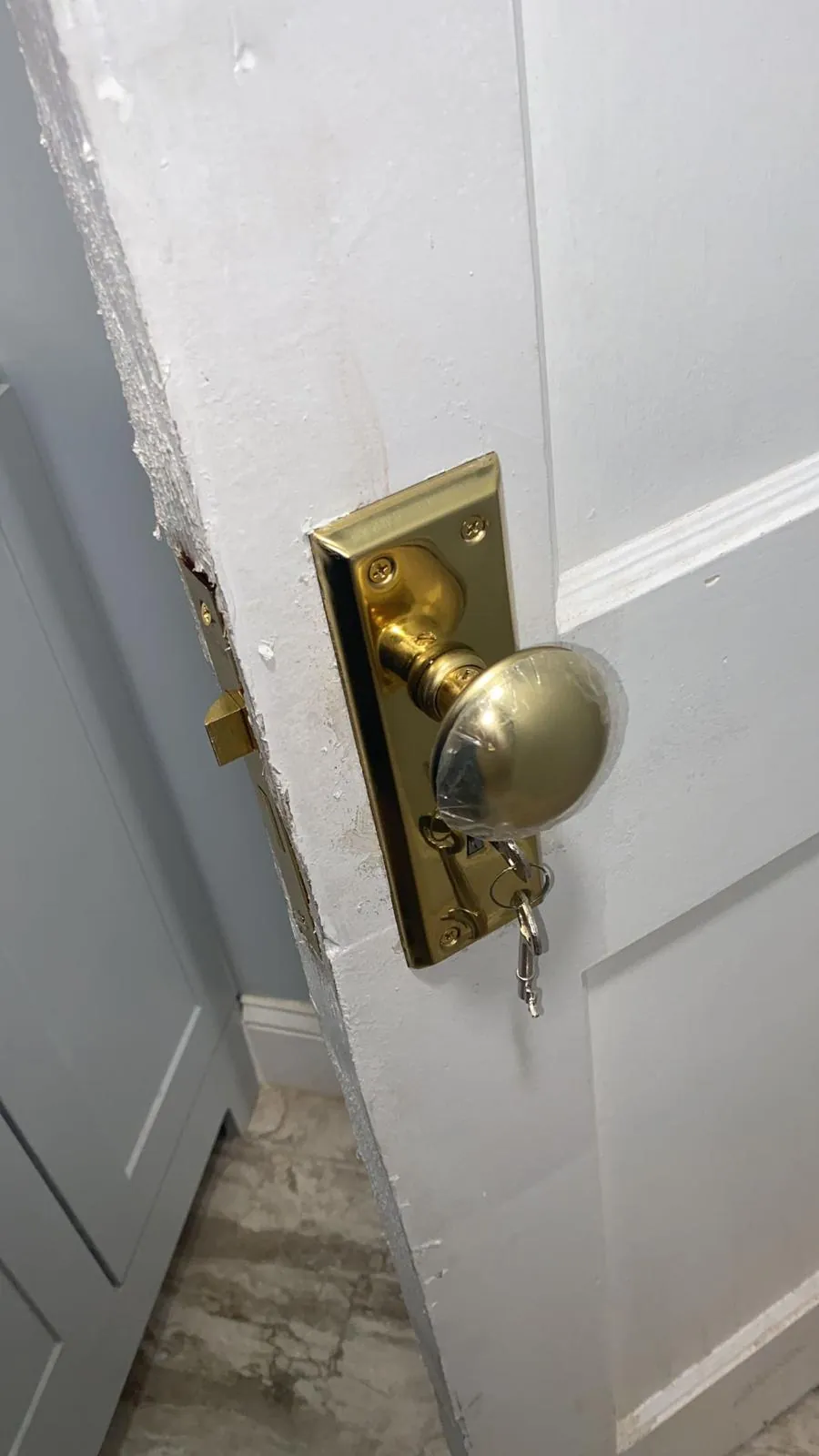
If you come home and find a door forced open, the first 24 hours come down to four jobs in this order: get safe and call the police, document the damage before anything is touched, make the house lockable again before you go to sleep, and shut off every key, code and remote the burglar might have walked away with. Most people do these out of order because they're shaken, and that's where the trouble starts: a door gets fixed before photos are taken, or new locks go on while the stolen garage remote still opens the garage. This post walks through the day hour by hour, from the moment you notice the damage to the next evening. For what the repair itself involves, see our break-in repair service.
Hour zero: don't go inside
A splintered jamb, a door standing open or a broken pane by the deadbolt all mean the same thing: you don't know whether anyone is still in the house. Back away, go to your car or a neighbor's place, and call 911. It feels dramatic when the house looks quiet. It isn't. Officers would much rather clear an empty house than have you walk in on someone.
While you wait:
- Don't touch the door, the lock or the frame. Marks on the strike and the latch area tell the police how the door was opened.
- Write down what you noticed when you pulled in: lights on or off, a gate open, a car you didn't recognize, the time.
- If you share the house, text the other adults so nobody else walks in alone.
Hours 1 to 3: police report and photos
Once officers have cleared the house, they'll take a report. Ask for the report number before they leave; your insurer will want it, and it's much easier to get on the spot than to chase later.
Then, before you clean up a single thing, take photos. Go wider than you think you need to:
- The entry point from outside, showing the whole door, then close-ups of the lock, the strike plate and the jamb.
- The edge of the door with it open, so the latch and bolt are visible.
- Every room that was gone through, before you put anything back.
- Any other door or window with pry marks, even if it held. Those count too.
A short video walking through the house works well alongside the photos. Store them somewhere other than a phone that could have been taken, such as a cloud account or an email to yourself.
Hours 3 to 8: make the house lockable tonight
This is the step people put off, and it matters most for how you sleep. A door that won't latch is an open invitation, and the person who forced it knows exactly which house it is.
Look at the door honestly. If the bolt still slides into a solid piece of wood and the door closes flat, you may be able to lock it as is. If the jamb is split along the strike, the latch hangs loose, or the door won't stay shut, it needs work tonight. That's where we come in. We take calls 24/7, and on a visit like this the goal is simple: when we leave, the door closes and locks. Sometimes that's a full repair on the spot. Sometimes, when a door or jamb has to be replaced by a carpenter later, it's a solid temporary fix that holds until then. Either way, you'll hear what needs doing and the total from the technician up front, before a single screw comes out.
In Nashua we see this play out differently depending on the building. In the older two- and three-family houses around the Tree Streets and French Hill, back doors and side doors often have thin original trim, and that's what gives way. In apartment complexes, the unit door is usually fine and the problem is a forced common entry, which is the landlord's or manager's call to fix. Let them know right away. You can read more about how we handle these calls in the city on our Nashua emergency locksmith page.
While the door is being secured, check the rest of the ground floor. Burglars often try two or three openings before one gives. A basement bulkhead, a slider or a garage entry door with pry marks may need attention too.
Hours 8 to 12: shut off what was taken
Go through the house with one question in mind: what could the burglar use to come back? This list is longer than most people expect.
- House keys. A spare on a hook, a key ring in a drawer, a set in a bag that was taken. If any keys are missing, the locks they fit need to be rekeyed so those keys stop working. Rekeying keeps your existing hardware if it wasn't damaged.
- Mail and paperwork with your address. A stolen key is worth much more to a burglar when it comes with the address it opens.
- Garage door remotes. Erase every remote stored in the opener, then pair only the ones still in your hands again. The opener's manual explains how; on most units it's a button on the motor head.
- Keypad and smart lock codes. Change every code, including guest and dog-walker codes, and remove any users you don't recognize in the lock's app.
- Car keys. If a car key or fob was taken, the car is at risk too, and anything in it with your address. Ask about having the missing key removed from the car's memory.
- Work keys or badges. Tell your employer tonight. It's their building and their call, and they'll want to know.
If several of these apply, we can usually rekey the house in the same visit we secure the door. Our same-day rekey service exists for exactly this situation.
Hours 12 to 24: insurance, neighbors and a fresh look
The next morning, with some sleep behind you, the remaining jobs are calmer.
Call your insurer. Have the report number, your photos and a first list of what's missing. Ask whether they want to send an adjuster before permanent repairs are made, and keep every receipt, including the locksmith's. If your insurer asks for details of the work, ask us for a written description of what was repaired and replaced.
Talk to the neighbors. Someone may have a doorbell camera pointed at the street, or may have noticed something without realizing it. Neighbors on the same block are also likely to want to know, since break-ins in a neighborhood sometimes come in clusters.
Walk the outside of the house in daylight. Look at every exterior door as if you were the person who came in. The weak points are usually the same: a strike plate held by short screws, a deadbolt that doesn't fully extend into the frame, a side door with only a knob lock, glass within reach of a thumbturn. Our post on what to do about the locks in a new house has a door-by-door checklist that works just as well after a break-in.
What can wait a few days
Not everything belongs in the first 24 hours. Choosing new hardware, upgrading every door, adding cameras or deciding on a keypad lock are all good ideas, but they're better made with a clear head than at 2 a.m. The goal of the first day is narrower: the house locks, nobody else has a working key, and the paperwork is started. Once that's done, the bigger decisions can be made calmly.
It's also normal to feel uneasy at home for a while. Knowing that the door is solid and that every key in circulation is one you can account for goes a long way toward getting that feeling back.
Common questions
Should I fix the door before the insurance adjuster sees it?
Make it secure, but hold off on permanent repairs until you've photographed everything and checked with your insurer. Securing a door so the house can be locked is normally expected; ask your insurer how they want the rest handled.
The burglar didn't take any keys. Do I still need to rekey?
If you're certain every key is accounted for and the lock wasn't damaged, rekeying isn't required. If you're not sure, for example a spare used to hang by the door, rekeying is the simple way to stop wondering.
Can you come at night after the police leave?
Yes. We answer around the clock, every day of the year, and securing a forced door so you can sleep is one of the most common reasons people call us late.