
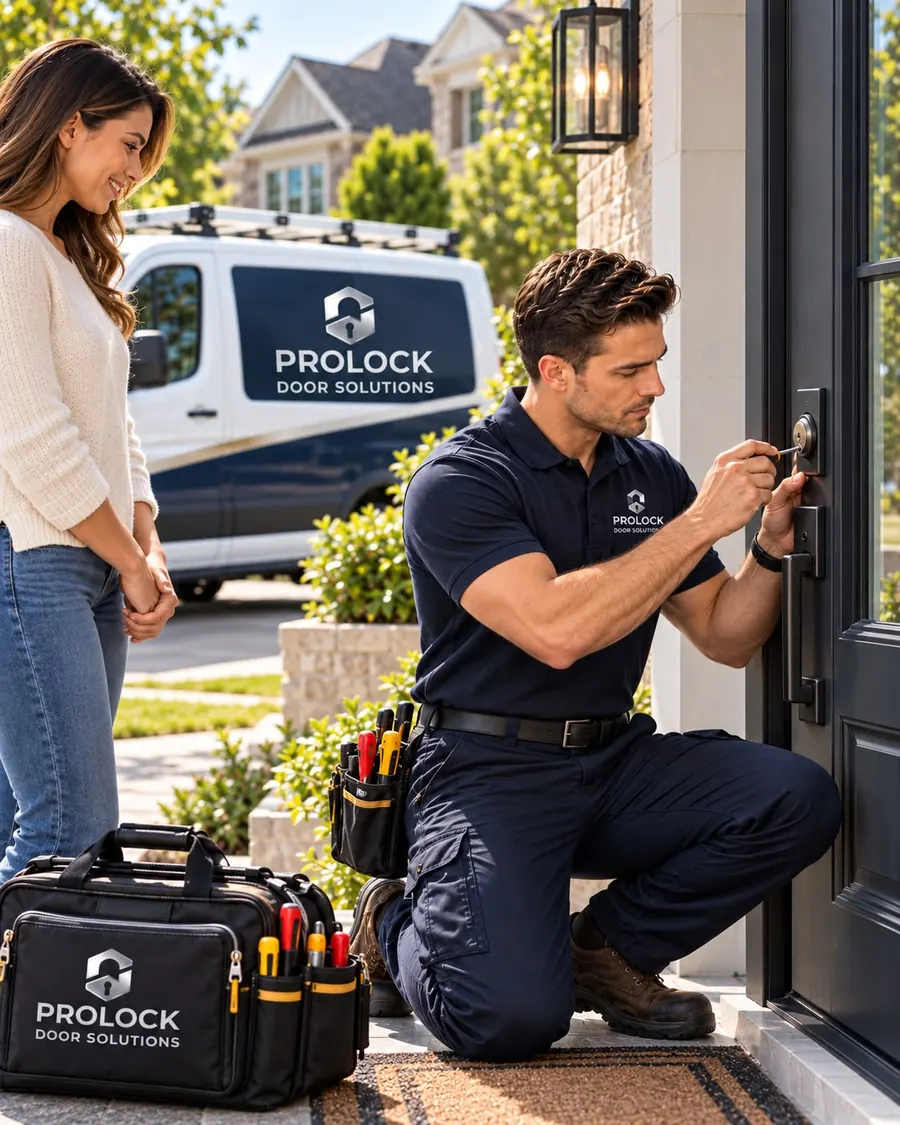
When a lock needs replacing
Locks don't last forever. Springs weaken, pins wear, and cheap castings crack. Sometimes the lock is fine but no longer fits what you need. These are the signs we see most:
- The key has to be jiggled, or the lock only turns from one side.
- The knob or lever is loose and wobbles no matter how much you tighten it.
- The deadbolt drags, or you have to push or lift the door to lock it.
- The lock was damaged in a break-in or a forced entry attempt.
- You want a different finish, a lever instead of a knob, or a keypad.
Fitting the lock to the door
Most of the trouble with store-bought locks comes from the door, not the lock. Older New England homes often have thick doors, unusual backsets, or bores that were drilled long before today's standard sizes. Newer doors can be thin, hollow or pre-drilled for a different style. Before we install anything, we measure:
| Measurement | Why it matters |
|---|---|
| Door thickness | Locks are built for a range. Too thick or too thin and the trim won't seat. |
| Backset | The distance from the door edge to the center of the bore, usually 2-3/8" or 2-3/4". |
| Bore size | The hole for the lock body. Older doors may need adapters or filling. |
| Strike alignment | If the bolt doesn't meet the strike cleanly, the lock drags and wears out early. |
When something doesn't line up, we fix it during installation, so the new lock works the way it should from day one.
What we install
- Keyed entry knobs and levers
- Single and double cylinder deadbolts
- Handlesets for front doors
- Keyed-alike sets, so one key opens every door
- Keypad and smart locks
- Grade 1 and high-security deadbolts
- Interior privacy and passage sets
Bringing your own lock
If you've already bought a lock, we're happy to install it. We'll check that it fits your door first. If it doesn't, we'll explain why and suggest something that will.
Replace or rekey?
If your locks work well and you only want old keys to stop working, rekeying is simpler and costs less. If they're worn, damaged or you want an upgrade, replacement is the right call. We'll tell you which one fits.
Choosing hardware that lasts
Most locks that fail early are low-grade sets that weren't made for an exterior door that's used dozens of times a day. When we recommend hardware, we look at three things:
- Grade: a Grade 1 or Grade 2 deadbolt and entry set for exterior doors.
- Finish: finishes that hold up to New Hampshire winters and road salt carried in on boots.
- Keyway: a keyway that matches your other locks, or one we can rekey to match.
Levers are easier than knobs for kids, older family members and anyone carrying groceries, and they're required on many commercial doors. If you're replacing a knob anyway, it's a good moment to consider a lever.
Interior doors
Interior locks matter too: privacy locks on bathrooms and bedrooms, keyed locks on home offices or storage rooms, and passage sets on closets. We replace interior hardware to match your exterior finish, so the whole house looks consistent.
Common questions
Can you match my existing finish?
Usually. Common finishes like satin nickel, matte black, oil-rubbed bronze and brass are widely available. If you want something specific, tell us when you call.
Can you install a lock on a door that has never had one?
Yes. We can bore a new door for a lock and deadbolt, cut the edge for the latch, and install a strike in the frame.
Will new locks come with keys that match my other doors?
They can. We can key new locks to match your existing key, or rekey everything to one new key.