
Yes, for almost everyone who drives a car built in the last twenty years. When you still have one working key, a spare is a copy: we read the cuts from your key, cut a new blade and add the new chip or fob to the car while the old one is right there. When the last key is gone, the same car needs a full replacement: identifying the key from the VIN or the locks, cutting from scratch, programming without a working key, and sometimes towing if the vehicle is one of the few that only the dealer can program. The spare is the smaller job, it's done on your schedule instead of in a parking lot, and it removes the worst version of a lost-key day. Below we explain where the difference comes from, which kind of spare makes sense for your car, and the few cases where you can skip it. For the service itself, see spare car keys.
Why one key and zero keys are such different jobs
A modern car key does two things. The metal blade, if there is one, opens the door and turns the ignition. The chip inside, called a transponder, tells the car's immobilizer that this key is allowed to start the engine. Without the right chip, the engine won't run even if the blade turns.
With a working key in hand, both parts are easy to reproduce. The blade is traced or decoded from the original. Many cars let a new key be added through a programming procedure that starts with an already-recognized key. Some chips can even be cloned from the original.
Without any key, there's nothing to copy. The cuts have to be worked out from the VIN or by reading the door lock, and the car has to be put into a programming mode that doesn't rely on a known key, which on some models means extra security steps and time. It's the same outcome, a key that starts the car, reached the long way. We go through what that process looks like in our article about what to have ready when the only key is lost.
Which spare should you get?
A spare doesn't have to match your main key exactly. Here are the usual options, from simplest to most complete:
- Chip-only key, no buttons. On many vehicles with a turn-key ignition, a plain transponder key will run the engine, and its blade still works the door locks. It's the simplest spare and a good one to keep in a drawer at home. Learn more about transponder keys.
- Remote head or flip key. The blade, the chip plus lock and unlock buttons, all in a single housing. This is the right choice if a second driver uses the car every day.
- Smart key for push-to-start. If your car has a start button, the spare is another smart key, which also holds a small emergency blade for the door. These are the most involved keys to replace from zero, so a push-to-start car is where a spare pays off most. If the one you have ever stops responding, our post on a dead push-to-start fob covers how to get going.
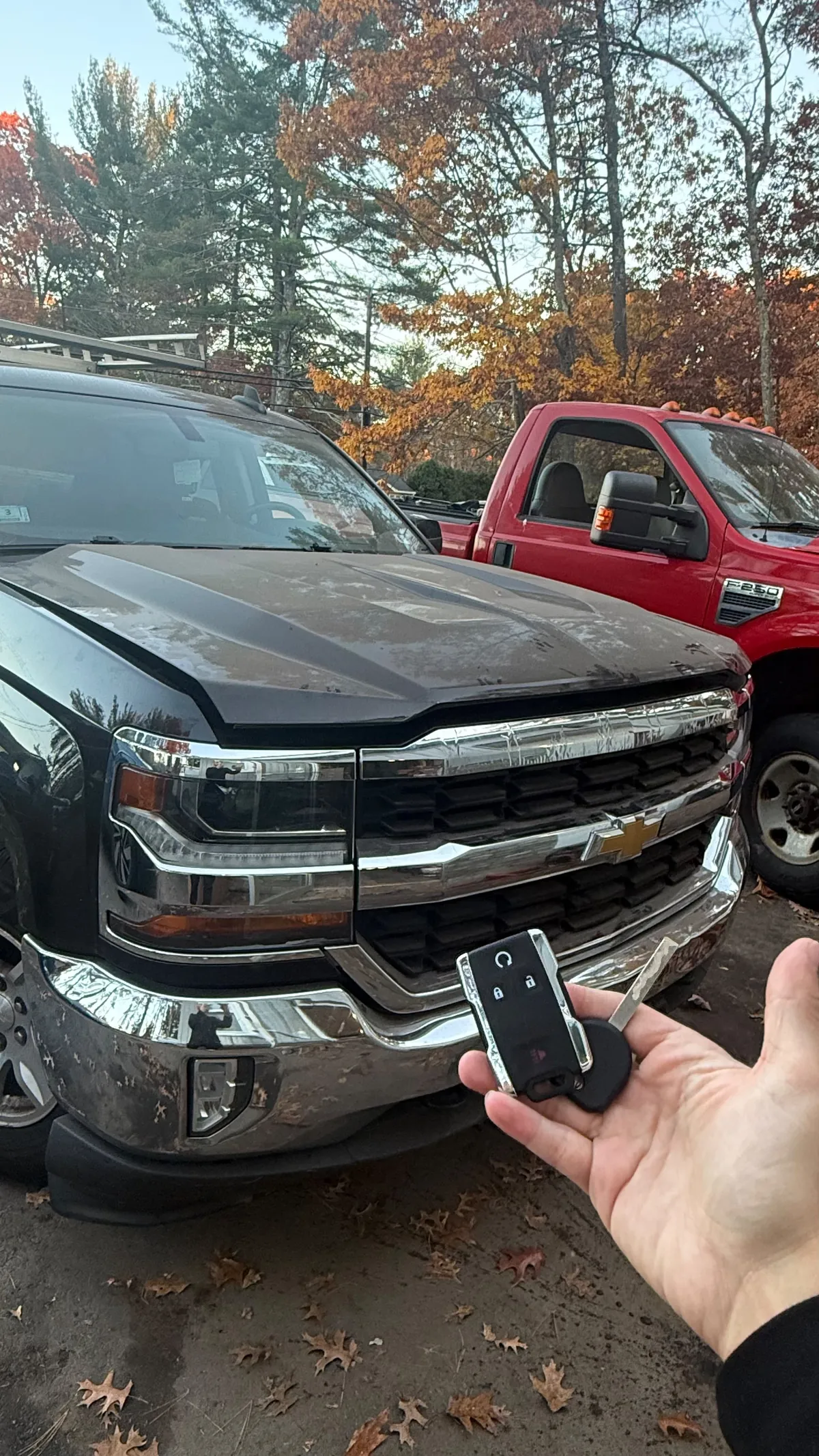
Take the Chevrolet Silverado in the photo above as an example. Depending on the year and trim, a Silverado might come with a turn key and a separate remote, a flip key, or a smart key with a start button like this one. The year, make and model tell us which, and that decides what the spare needs. A Subaru Outback or Forester owner faces the same question: the same nameplate has used several key styles over the years. Not sure which style you have? Give us the year, make and model on the phone and we can identify it.
Who benefits most from a spare
Some situations make a second key close to essential:
- Households with one key and two drivers. The key ends up in the wrong pocket, at the wrong job, at the wrong time.
- Families with a new teen driver. A second key means the parents' set never has to leave the house.
- Anyone who bought a used car with a single key. It's common, and it's worth fixing in the first week of ownership rather than after the first lost key.
- Trucks used for work. A contractor's pickup that sits idle because the only key went home in someone's jacket costs a day's work.
- People who park far from home every day, at a commuter lot, a hospital garage or an airport. A spare at home is only useful if someone can bring it, but that beats starting from zero.
In Litchfield, that list covers a lot of driveways. It's a town where nearly every trip starts with a car: commutes north along Route 3A or across the river to Hudson and Nashua, school runs, practices and weekend errands across the Merrimack River. When the car is the only practical way to get around, one lost key can leave a household stuck. We serve Litchfield along with the rest of the area listed on our service areas page.
When a spare might not be worth it
We'd rather you spend money where it helps, so here are the honest exceptions:
- An older car with a plain metal key and no chip. If a hardware-store copy starts it, that copy is your spare. Make one and you're done.
- A car you're about to sell or trade in. If it's leaving within weeks, the next owner can decide.
- A car that already has two keys. Keep the second one somewhere separate from the first and you're covered.
One caution: a hardware-store copy of a chip key will usually turn the door lock yet leave the engine dead, since the blade was copied and the chip wasn't. Before you count a copy as a spare, try starting the car with it.
Where to keep the spare
A spare only helps if you can get to it when the main key is gone. Keep it inside the house in a place every driver knows, or with a family member or neighbor nearby. Don't keep it in the car or in a magnetic box under the bumper, where it helps whoever finds it more than it helps you. Test it every so often; a spare fob with a dead battery may still start the car with the emergency procedure, but you'll want to know before a cold January morning.
Common questions
Do I need to bring my car for a spare key?
Yes. The new key has to be programmed to the car, so we need the vehicle, your working key, your registration and a photo ID. We can come to the car at your home or work.
Will adding a spare affect the key I already have?
No. Your current key keeps working. The car simply learns one more key. If any key is ever lost, we can remove it from the car's memory where the system allows it.
Can you make a spare for any car?
We work on all makes, models and years. A handful of newer vehicles need dealer equipment for programming. When that applies to your car, you'll hear it from us on the first call, before anything is booked.